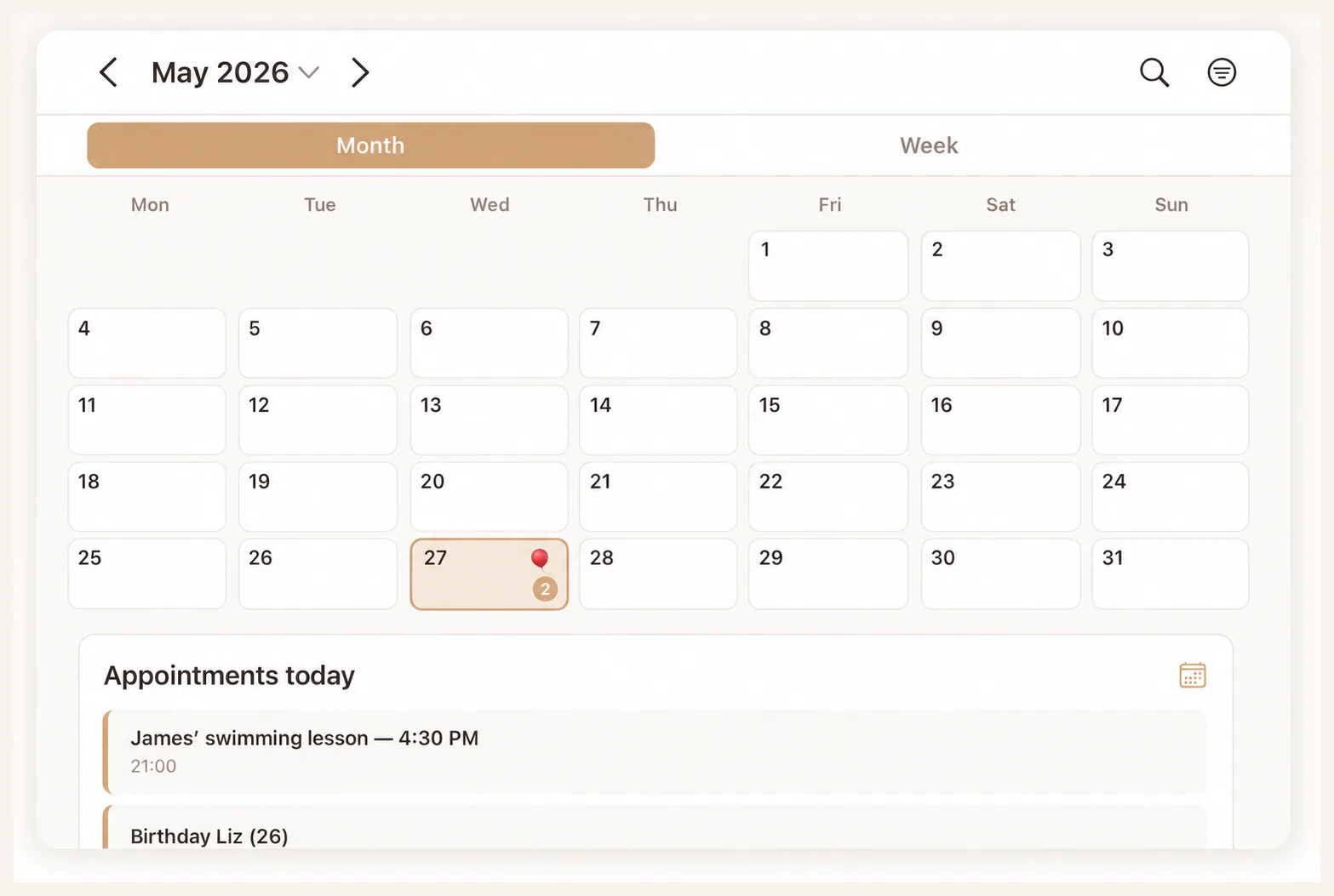
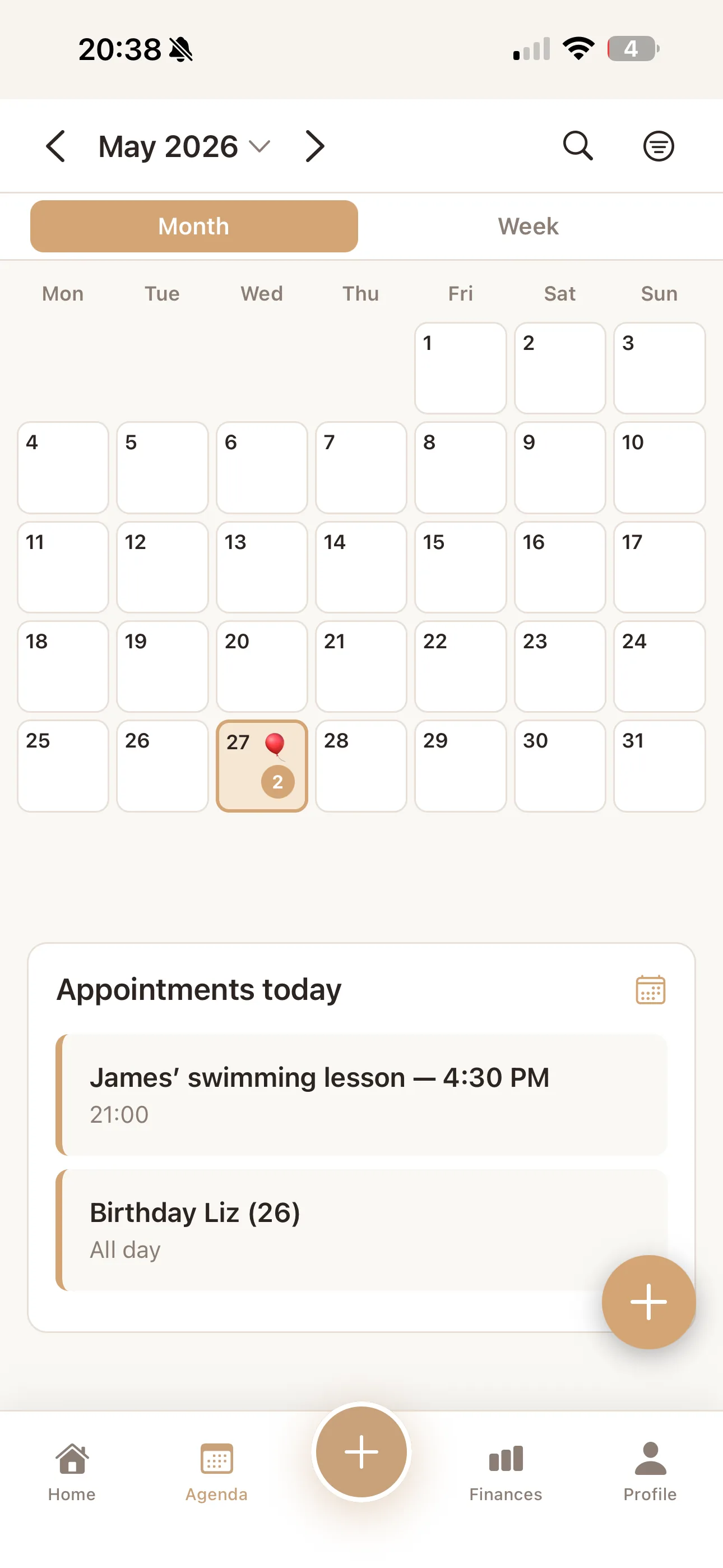
A family meal plan does not need to be a collection of new recipes. Its main job is to match dinner with the time and energy available that day. Start with the household calendar and the food already at home, then choose meals that can still work when a meeting runs late or practice takes longer than expected.
Start with the busiest evenings
Write down roughly how much cooking time is available each day. Choose a familiar, straightforward meal on packed evenings. Save recipes requiring more steps for a time when someone has room to make them.
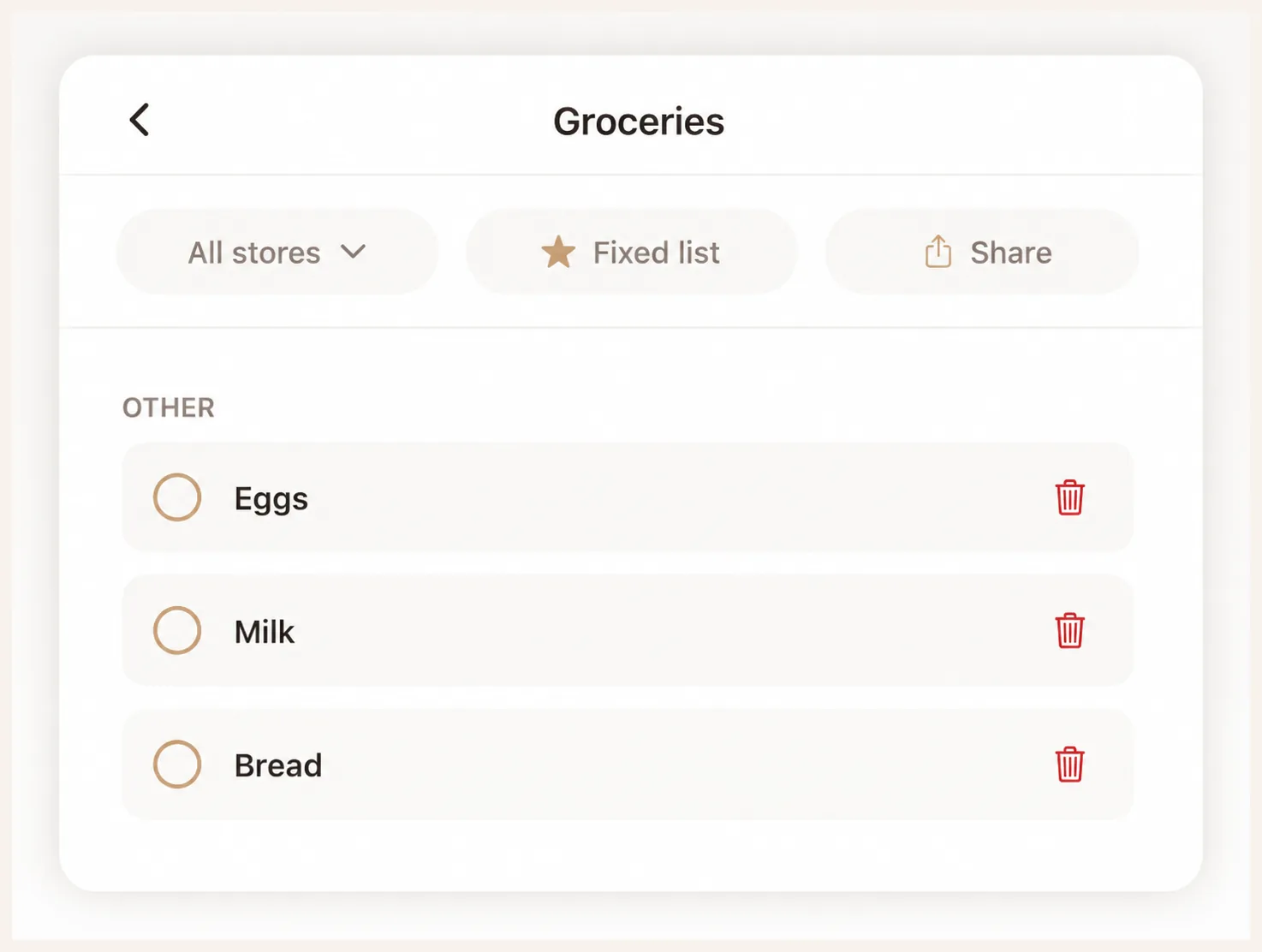
Also check who will be eating at home. Cooking for five may not make sense when two people have other plans. Knowing who needs dinner helps you think about quantities before adding ingredients to the shopping list.
Keep a small collection of reliable meals
Build a list of dishes your household enjoys and knows how to make. Pick several of those and, if you like, add one unfamiliar recipe. This avoids making the whole week depend on ingredients and timings you have not tried before.
A sample week might include a familiar pasta dish on Monday, a quick dinner after sport on Tuesday, soup and bread on Wednesday, and a meal using open ingredients on Thursday. This is an organisational example, not nutrition advice; adapt the choices to your needs and existing dietary guidance.
Give leftovers a place in the plan
Check which products should be used first and place those meals earlier in the week. Put a leftovers evening on the calendar instead of assuming everything will be used somehow. Follow packaging and reliable food-safety guidance when deciding how to store or reuse food.
- Check the fridge before selecting recipes.
- Plan only the number of cooking nights you need.
- Notice ingredients that can work in more than one dish.
- Keep a simple backup option available.
Allow yourself to move a meal
A meal plan is a tool, not a promise that every dinner must happen on its assigned day. When moving a dish, check whether any ingredients need using sooner and update the shopping list if a recipe is cancelled.
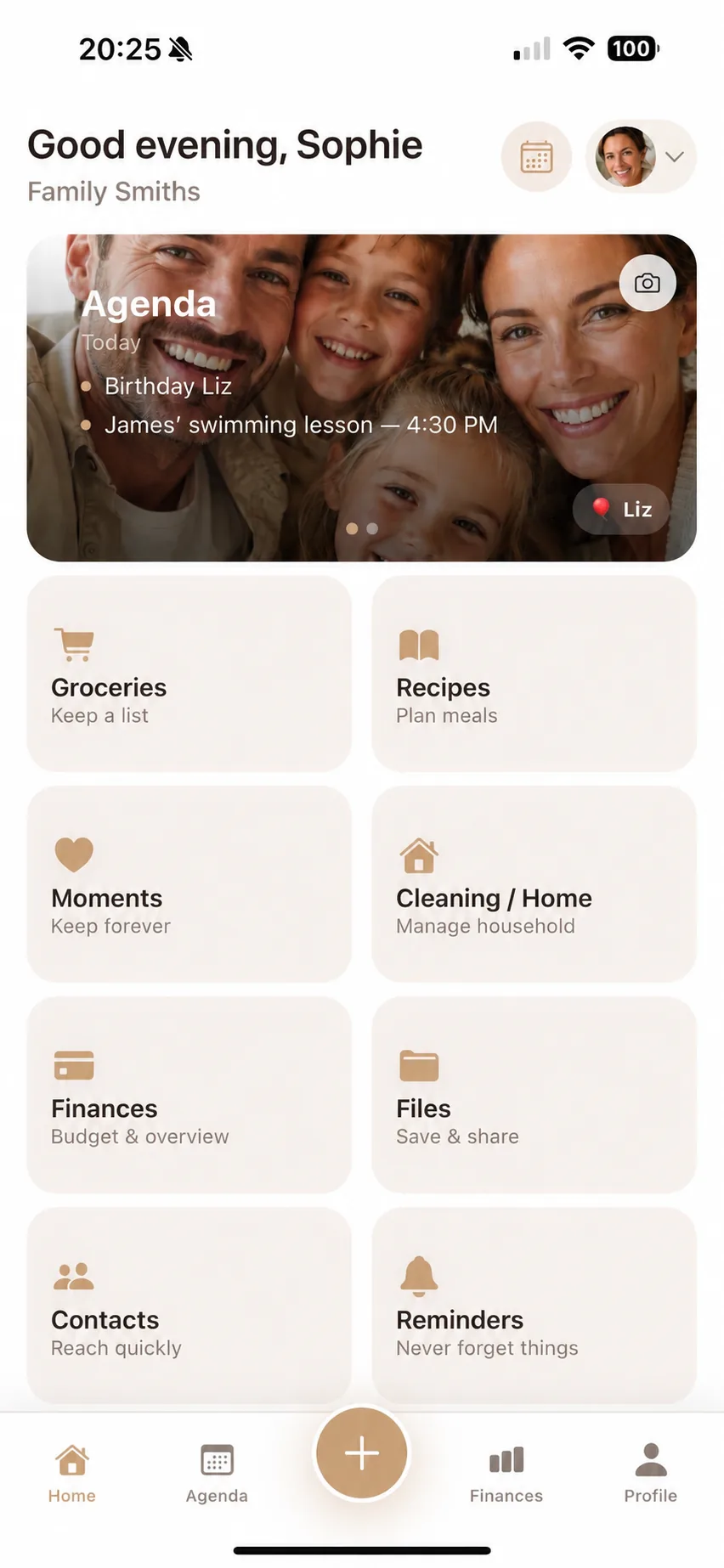
Review which meals fit the week and which took more effort than expected. Flow Fam presents meal planning and shared shopping as parts of the same family toolkit. Start with three planned dinners if seven feels too much. A smaller plan you use is more helpful than an ambitious one that becomes another chore.