Family planning often breaks down around an appointment rather than during it. Swimming is on the calendar, but who collects the children and when will everyone eat? A useful weekly plan connects those questions. The aim is not to fill every minute. It is to make the moments when you need each other easier to see.
Start with the commitments you already have
Add work, school, childcare and recurring activities first. Include travel or preparation when they affect whether something is possible. An appointment ending at five and a lesson starting at quarter past may fit on a calendar, but the journey between them might not.
Only then add flexible tasks and things you would like to do. Keep a distinction between an appointment with a specific time and a task that needs to happen sometime that day. Otherwise, an ordinary list can make the whole week look fully booked.
Assign responsibilities, not just activities
For commitments that need coordination, name the person responsible. Include collecting, driving, packing equipment or staying home for a delivery. A name beside an action prevents both adults from assuming the other has taken care of it.
For example, on Tuesday one parent collects the children with their sports bag while the other prepares a simple dinner. The plan now explains how the afternoon works, rather than simply listing two activities that happen during it.
Keep a short weekly check-in
Choose a regular moment to look at the next seven days. Deal with clashes first, then meals and shopping. Ten minutes is a useful starting point, not a requirement to continue talking once the practical questions are answered.
- Which day is busiest, and what can we simplify?
- Does any appointment still need someone to take responsibility?
- When will we shop, and how many dinners need planning?
- Where can we leave room for a change?
Make changes in one place
Update the shared plan when something moves, and agree how to communicate urgent changes. Editing the calendar alone may not be enough if someone is already on their way. A direct call or message can still be necessary.
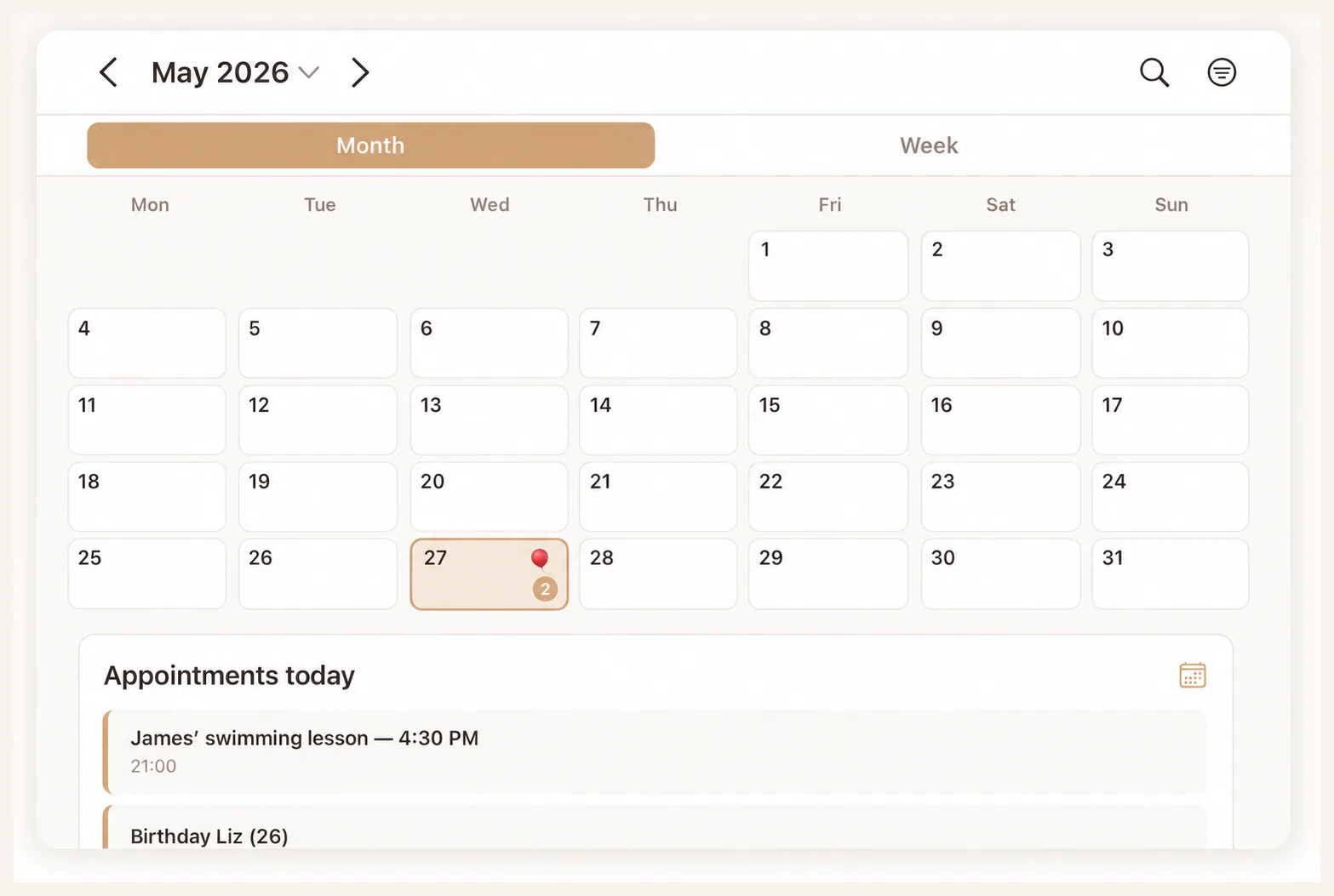
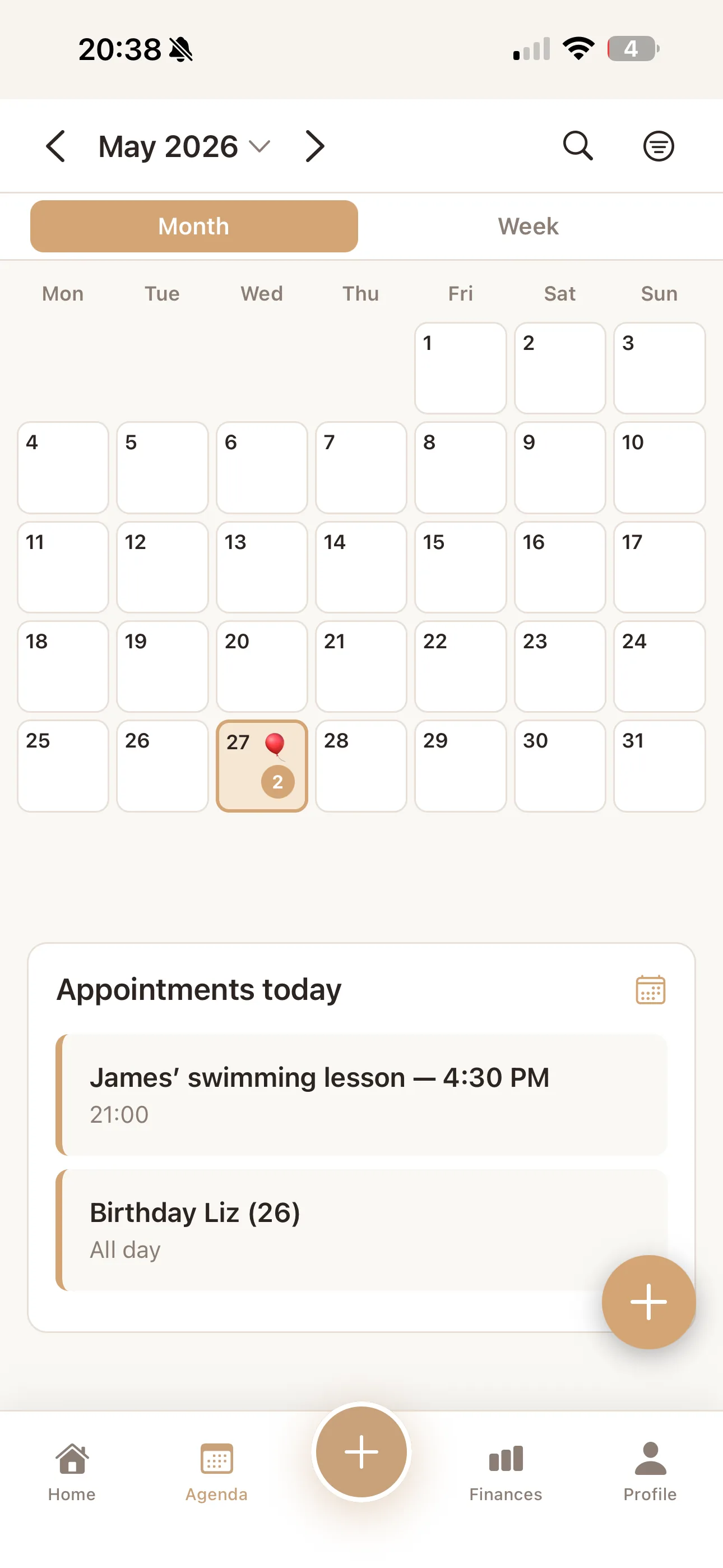
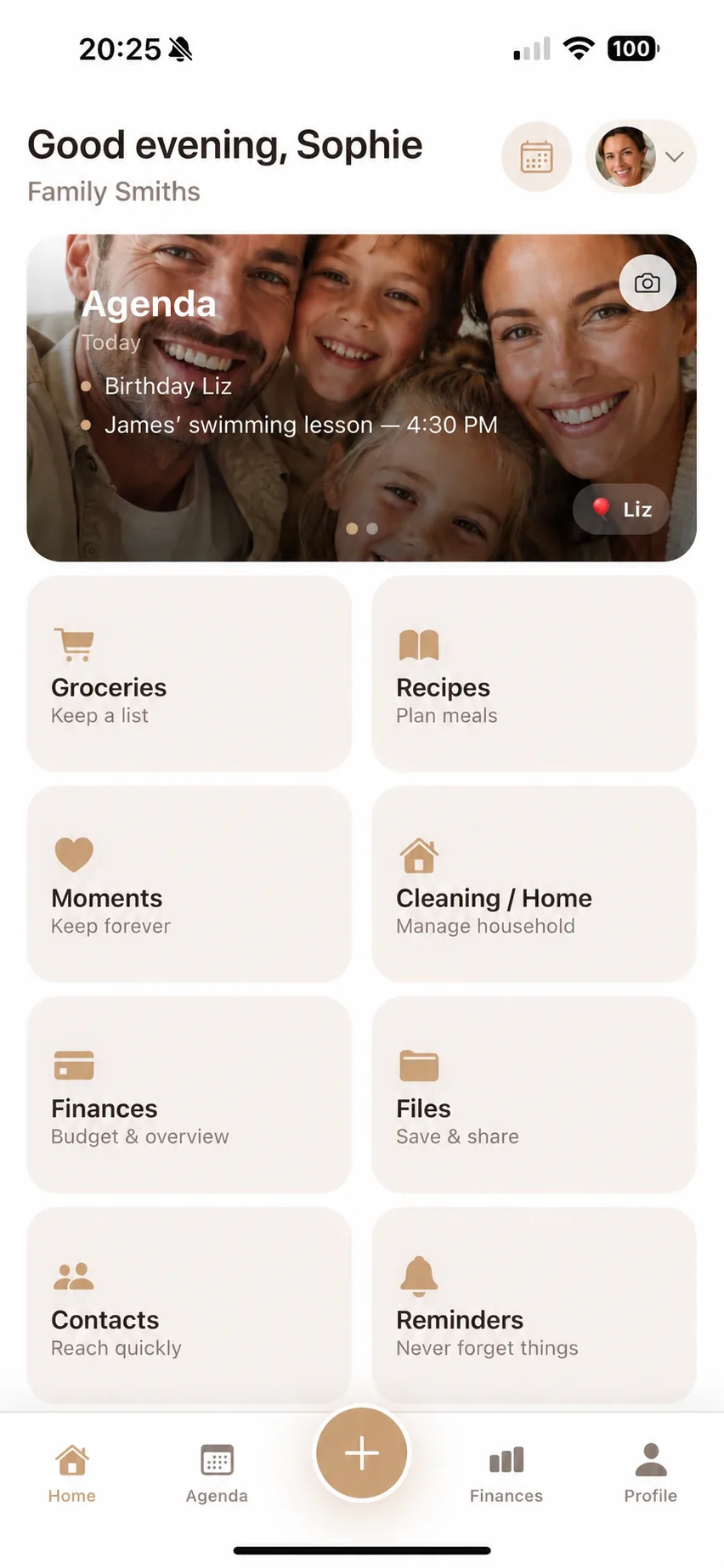
After a week, identify one thing that helped and one detail that took too much effort. Remove unnecessary administration. A shared family calendar, including the one presented in Flow Fam, is useful when the agreement around it stays simple. Keep the version that works during a messy week, not just an ideal one.
Shared calendar app for couples & families | Flow Fam